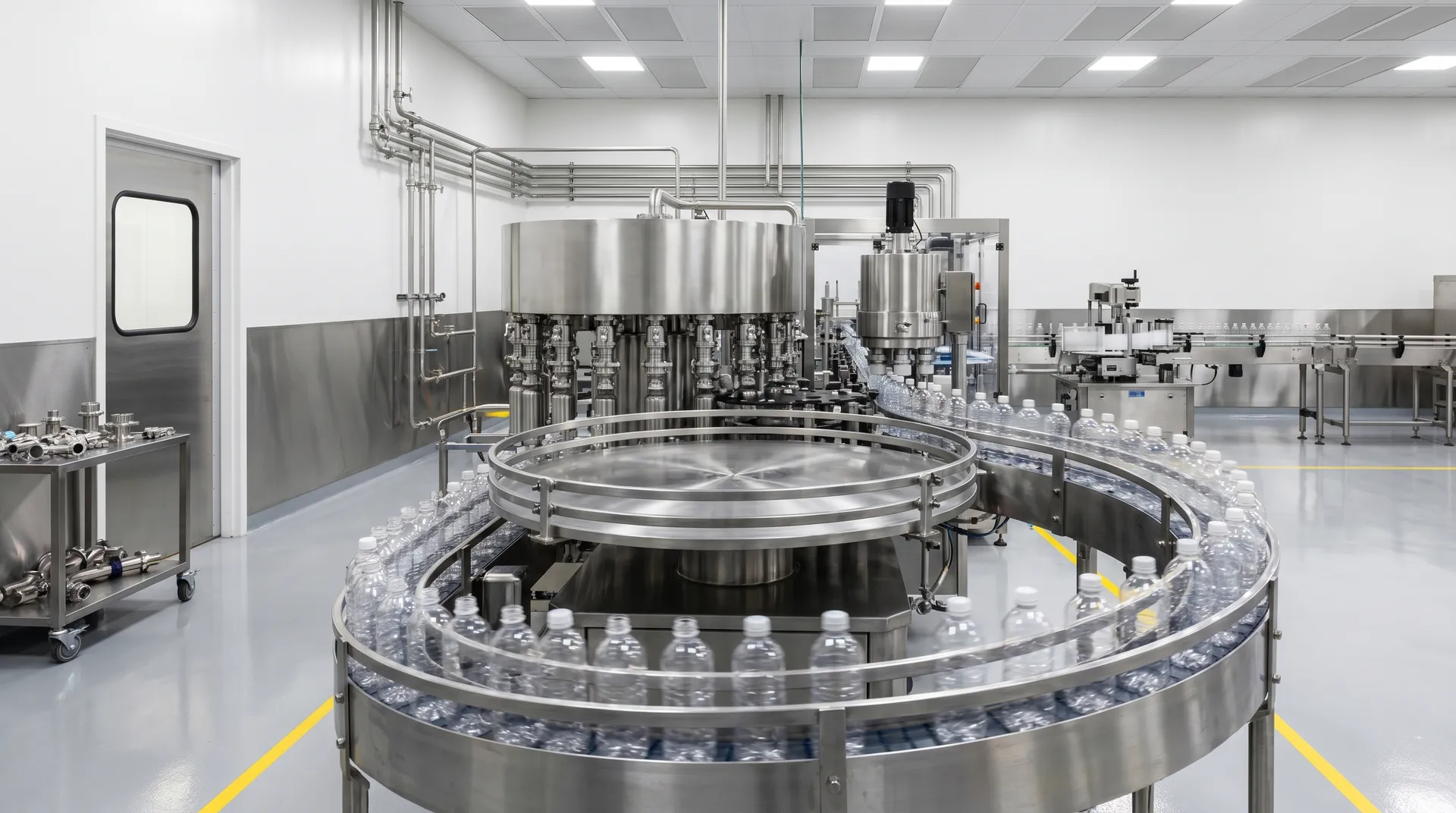
You run a meat plant, dairy, brewery, or bakery. Every line gets pressure-washed daily with caustic cleaner at 70 °C. Some lines (flour, sugar, dry ingredients) also have combustible dust hazards. Standard industrial fixtures fail inside 2 years from corrosion + water ingress. Here's what survives a Canadian food plant and stays NSF-compliant. See our IP69K washdown lighting lineup built for this exact spec.
What hazard you're dealing with
Two stacked problems. First, sanitation. CFIA (Canadian Food Inspection Agency) and provincial regulators require all surfaces in food zones to be cleanable, non-shedding, and corrosion-resistant. Pressure washdown at high temperature with caustic and acidic chemicals destroys ordinary fixtures. Second, combustible dust in dry-ingredient processing. Flour, sugar, milk powder, and starch are all Class II combustible per NFPA 61 and need dust-rated fixtures in mixing and conveying zones.
How the code classifies typical zones
| Where | Classification | What you need |
|---|---|---|
| Direct food contact zone (Zone 1) | NSF / 3-A standard, IP69K | Stainless or FRP, IP69K, NSF-listed |
| Splash zone / production floor | NEMA 4X washdown | IP66+, stainless or FRP body |
| Non-food zone (warehouse, packaging) | Industrial wet | IP65 LED |
| Flour / sugar / dry-ingredient processing | Class II, Division 2, Group G | Dust-tight LED |
| Inside flour silos / receiving | Class II, Division 1, Group G | Dust-ignition-proof |
| Cold storage / freezer | Cold rated –30 °C | Cold-start LED |
The lighting
- Fixture type: Stainless steel or FRP body, smooth profile, no horizontal ledges, sealed-lens design that wipes to NSF standard. Vapor-tight LED linear or low-bay for production zones; dust-tight or dust-ignition-proof for dry-ingredient handling.
- IP rating: IP69K is the gold standard: high-pressure (80-100 bar, up to 1,450 psi per ISO 20653), high-temperature (80 °C) water spray. IP66 minimum for non-direct-spray zones.
- Light level: 500 lux production floor; 750 lux at sorting/inspection lines; 1,000+ lux at quality control benches.
- CRI: 80+ in inspection/QC (color matters for spoilage/contamination detection); 90+ for visual grading lines (produce, baking).
- CCT: 5000 K daylight matches inspection visual standards.
- NSF / 3-A listing: Required for direct-food-contact zones; verify nameplate. Most stainless food-grade LEDs carry NSF 2 listing.
- Lens material: Polycarbonate or impact-resistant tempered glass, not standard glass (chips can contaminate product).
IP69K vs IP66 vs NEMA 4X
These three ratings get used interchangeably on food-plant spec sheets, but they test different things.
- IP69K measures water and dust ingress under a close-range, high-pressure, high-temperature spray, per ISO 20653: roughly 80-100 bar at 80 °C water temperature, held 10-15 cm from the fixture at multiple angles. It's built for washdown wands, not general weather exposure.
- IP66 measures dust-tight construction plus resistance to powerful low-pressure water jets from any direction, at ambient temperature. It doesn't cover the high-pressure, high-temperature combination a washdown wand delivers.
- NEMA 4X is a North American enclosure rating covering corrosion resistance and water/dust ingress together; it doesn't specify the ISO 20653 spray parameters either.
For direct washdown zones, look for a fixture rated both IP69K and NEMA 4X: IP69K covers the spray test, NEMA 4X covers long-term corrosion resistance in a caustic wash environment. Neither rating alone tells the full story.
Cables & accessories (yes, we supply these too)
Food plants use TECK90 in stainless cable tray for above-line installs, AC90 or ACWU90 in conduit for non-food zones. CSA C22.2 No. 174 glands with stainless or polymer body; standard zinc plates corrode under daily caustic wash. Stainless or polymer JBs in food zones; aluminum is acceptable in non-food zones. We supply fixtures, stainless cable, food-grade glands, and JBs as one package. Many food plant contractors mismatch zinc-plated fittings into wash zones and have to swap them after the first sanitation cycle damages the housing.
Quebec rule
Quebec food cluster (Saint-Hyacinthe meat / dairy belt, Brossard / Anjou bakeries, Montreal-area breweries) is regulated by MAPAQ (Ministère de l'Agriculture, des Pêcheries et de l'Alimentation du Québec) for food safety and RBQ for electrical installations. Bill 96 mandates French signage. Hydro-Québec's Solutions efficaces program's Medium and Large Business component covers food-plant LED retrofits up to 75% of eligible costs (program terms as of September 2026); the small-business tier can reach 90%, but that bracket doesn't cover most commercial food-plant accounts. Agricultural processors may instead qualify under the program's separate Farming Component.
Ontario rule
Ontario food cluster (Mississauga / Brampton baking corridor, Cambridge dairy, Niagara wine + beverage, Windsor meat) is regulated by CFIA for federal-licensed plants + OMAFRA provincially. ESA inspects under the OESC. Save On Energy's Retrofit Program covers up to 50% of LED conversion project cost.
Common questions
Is IP69K the same as NEMA 4X? No. See "IP69K vs IP66 vs NEMA 4X" above for the full comparison. Short version: IP69K = high-pressure / high-temperature spray testing, NEMA 4X = corrosion + standard water spray resistance. For food washdown, you want fixtures rated both IP69K and NEMA 4X (most quality food-grade fixtures carry both).
What is NSF listing for lighting? NSF/ANSI 2 is a food-equipment standard covering cleanability and material safety for fixtures used in or near food handling areas: no exposed screws or ledges bacteria can shelter in, materials that hold up to repeated washdown, and a manufacturing-site inspection as part of the listing process. Inspectors generally accept NSF/ANSI 2 certification as documentation that a fixture suits food-zone use, though the exact requirement can vary by facility and jurisdiction, so confirm with your local authority.
Do I need explosion-proof in a flour mill? For active mixing, conveying, sifting, and silo zones, yes, dust-ignition-proof Class II Div 1 or 2 depending on dust concentration. Storage warehouse with bagged flour is usually unclassified. See our Grain Handling guide for dust handling specifics.
What's the difference between NSF listing and 3-A? NSF 2 is the broader food-equipment standard. 3-A is dairy-specific (more stringent). Most quality stainless LED for food zones carry NSF 2. Dairy-direct (filling lines, raw milk handling) often requires 3-A listed.
Why FRP instead of stainless? FRP (fiberglass-reinforced polyester) is lighter, doesn't corrode, and is easier to mount. Stainless is more impact-resistant and cleans more easily. Both meet NSF. Operators often mix: FRP overhead, stainless near impact zones.
Can I use the same fixture in production and warehouse? Possible but rarely cost-effective. Production-zone stainless IP69K fixtures cost 2–3× warehouse-zone industrial LED. Spec each zone for its actual requirements; don't over-build the warehouse.
Talk to a specialist
Food plant retrofit or new build? Send us your zone breakdown (production vs warehouse vs dry-ingredient) and we quote fixtures + stainless cable + food-grade glands + NSF JBs as one package. Or browse stainless vapor-tight LED.
Sources: NSF/ANSI 2, ISO 20653, CFIA Food Safety regulations, NFPA 61, CEC Section 18, RBQ, ESA Bulletin 18-1-21, Hydro-Québec, Save On Energy.
Spec'ing a project? We quote the whole package: fixtures, cable, glands, sealing fittings. Same day.